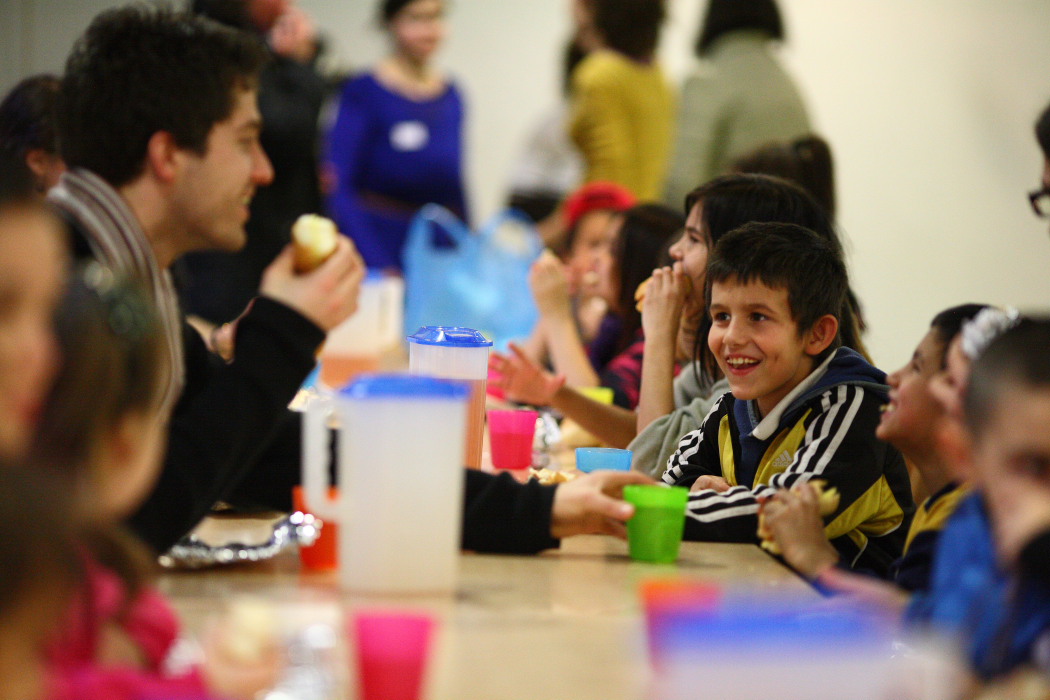
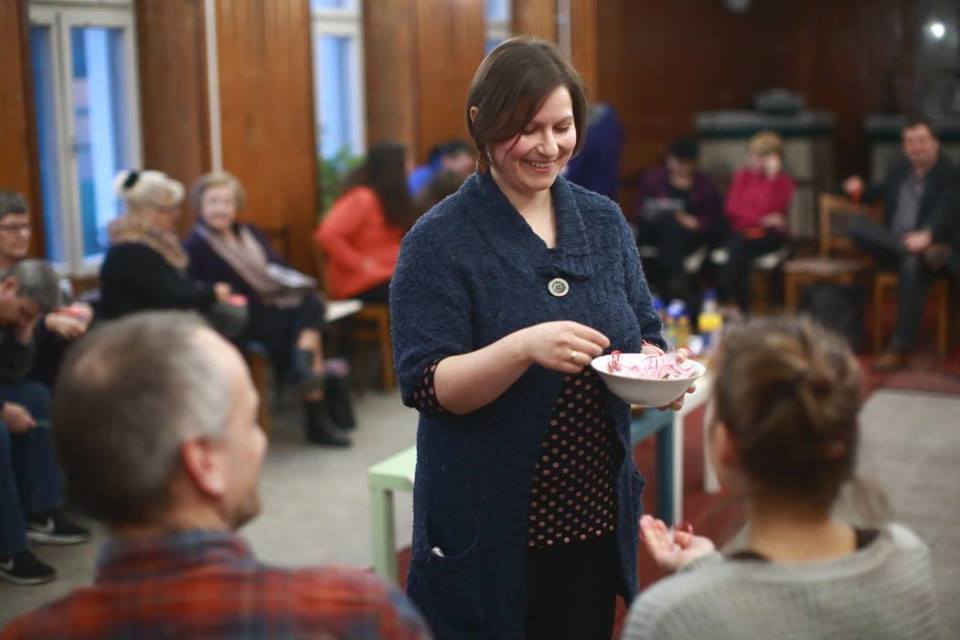
Pastor Bolba Marta – Evangelical-Lutheran Local Church in Budapest, the capital city of Hungary, community leader, founder of two community houses, Mandak House Civic Hub and Devai Refugee Center.
find more on her work: mandakhaz.hu, devaifogado.hu, berloikozosseg.hu, jozsefvaros.lutheran.hu
Thank you for the invitation to speak today.
I would like to share some reflections on the condition of churches and faith communities in Hungary after decades of authoritarian political culture, and especially during the sixteen years of Viktor Orbán’s rule.
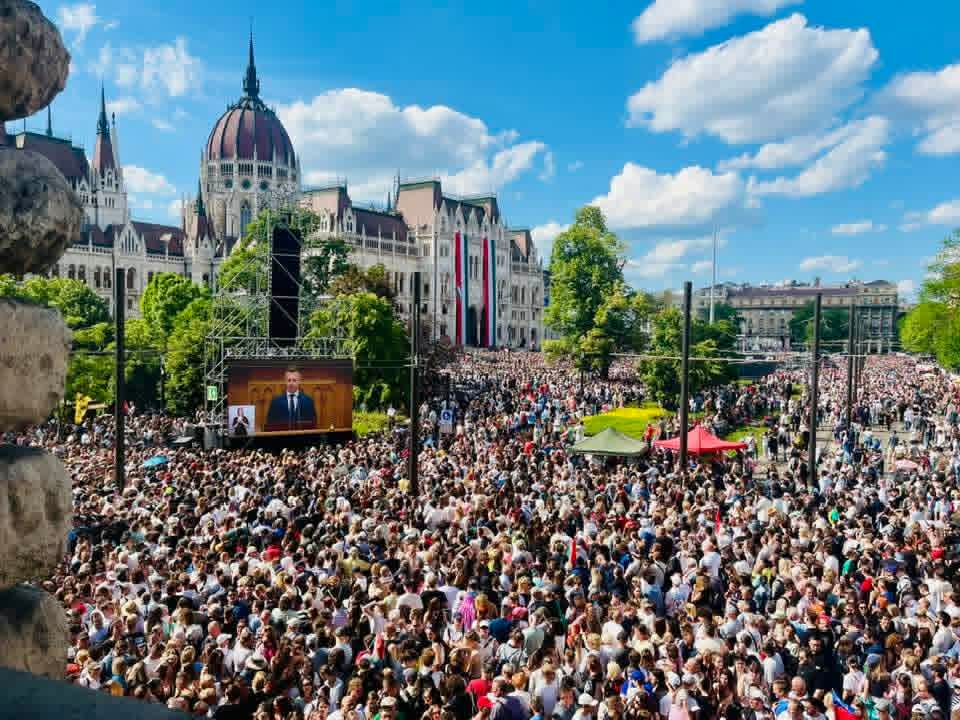
What recently happened in Hungary is not only a governmental change. In many ways, it represents a generational transition. For decades after the democratic transition of 1989, Hungarian political life was shaped either by the successors of the former communist state or by Viktor Orbán’s increasingly authoritarian system.
To understand the present, we must first understand the historical background.
After 1945, Hungary became a Soviet-style totalitarian dictatorship. Churches were placed under strict state control. Religious practice was discouraged, independent public speech was punished, and both secular and religious criticism of the regime faced repression. Priests were imprisoned, tortured, surveilled, and often recruited into the secret police system as informants.
The State Office for Church Affairs interfered directly in the appointment of pastors and bishops and controlled church structures and parish placements. The regime tolerated only a depoliticized Christianity. Churches were encouraged to care for the sick, the elderly, or people suffering from addiction, but speaking publicly about justice, inequality, freedom, or human rights was forbidden.
Youth ministry and evangelization often had to happen secretly. Organizing Christian programs for young people could itself become a political problem. The churches learned survival through silence, adaptation, and compromise with power.
The tragedy is that after the democratic transition of 1989, there was very little honest reckoning with this past. There was no deep institutional self-reflection, no meaningful confrontation with collaboration, and very limited leadership change inside the churches. Many habits of dependency and fear survived into the democratic era.
After 2010, Viktor Orbán offered the churches something very attractive: restoration, recognition, and privilege. He promised compensation for the humiliations churches had suffered during communism. Churches received massive state funding. Historic church buildings were renovated. Clergy salaries were supplemented by the state. Religious education returned to public schools as an optional subject. Churches were invited to take over major parts of education and social care systems.
But this support came with a clear expectation: loyalty.
The government expected churches not only to support the regime symbolically, but also to remain silent about injustice. Critical voices from within the churches were marginalized or punished. Several pastors who publicly criticized the government faced consequences from church leadership.
Meanwhile, Hungarian society experienced growing poverty, social exclusion, racist rhetoric against minorities and refugees, and extreme concentration of wealth and political power. Yet the institutional churches largely remained silent.
This is what many scholars describe as the “state capture” of the churches. The churches were not abolished or openly persecuted. Instead, they became dependent on political power and exchanged prophetic freedom for institutional privilege.
One of the clearest examples was the treatment of the Hungarian Methodist Church led by Pastor Gábor Iványi. Because Iványi publicly criticized the government and defended democratic values and vulnerable people, the Orbán government stripped his church of official status through political and legal means that many observers considered a violation of the rule of law. The message to all churches was unmistakable: critical voices would face retaliation.
The consequences for Hungarian Christianity have been profound. Public trust in the moral integrity of the churches has eroded dramatically. Today only around three percent of Hungarians attend church regularly on Sundays. Many people associate churches not with courage or solidarity, but with political dependence and moral compromise.
And yet, throughout these sixteen years, there were also communities and individuals of resistance inside Hungarian Christianity. Journalists, theologians, pastors, lay believers, ecumenical groups, and human rights activists tried to keep alive the moral and prophetic voice of the church.
As a young Lutheran pastor in a small congregation, I slowly realized what kind of political system was emerging around us. During my university studies, I wrote my thesis about the Holocaust, and I was deeply influenced by Dietrich Bonhoeffer and by the Hungarian Lutheran pastor Gábor Sztehlo, who rescued Jewish children during World War II.
I kept asking myself: what does faithful Christian witness mean in a country moving toward authoritarianism and exclusion?
I reached out to human rights organizations and asked how I could help. They invited me to speak publicly at demonstrations about housing injustice and the segregation of Roma children in education. I tried to speak with the moral language of the Gospel on behalf of marginalized people.
Our local church opened its spaces and resources to grassroots movements and solidarity initiatives. I became involved in local housing activism, and later we created a refugee support center that today serves thousands of families fleeing war and displacement.
For more than a decade, the Orbán government built political power through fear and hatred directed toward migrants and refugees. I believed it was essential to answer this hatred with organized solidarity and human dignity.
Together with around 1,200 volunteers, we built a humanitarian support network helping refugees with food, housing support, legal and social assistance, education, and community belonging. In the first half of 2026 alone, we are supporting and staying in contact with more than 5,600 clients.
We wanted people escaping war not only to survive in Hungary, but to find safety, dignity, and human connection.
And now, with the recent political transformation in Hungary, I believe a new possibility is opening.
For me, the strong public support behind the new Tisza government represents an opportunity to organize and connect believers who want to act in solidarity and defend human dignity, democracy, and freedom of conscience. It creates space for faith communities to stand again beside people instead of beside power.
Hungary still faces enormous social wounds. Around three million people live below the poverty line, and Roma communities continue to experience deep structural exclusion rooted in centuries of discrimination.
With the support of Faith in Action, I believe we could build new programs for religious freedom, democratic participation, and social solidarity — programs that help churches listen again to the real needs of people and reconnect faith with justice, compassion, and courage.
My hope is that believers in Hungary can recover their moral and spiritual freedom: the freedom to speak truthfully, to cooperate with social movements, and to stand with the vulnerable without fear.
I believe this is not only a Hungarian question. It is a question for churches everywhere: what happens when political power offers protection and privilege in exchange for silence?
And can faith communities rediscover the courage to choose solidarity over privilege, conscience over fear, and human dignity over political loyalty?
Thank you.